
The 16th Finance Commission, led by Arvind Panagariya, has recommended maintaining the states' share in central taxes at 41% for the five-year period starting April 1, 2026. The government has accepted this recommendation, with Rs 1.4 lakh crore allocated to states for FY 2026-27 as Finance Commission Grants.

'I am glad Aranyer Din Ratri is being shown at Cannes.' 'The film was better appreciated outside India even when released originally.'

The government has extended the tenure of the 16th Finance Commission by one month till November 30. The 16th Finance Commission was constituted by the government on December 31, 2023, with former Niti Aayog vice-chairman Arvind Panagariya as its Chairman.

'When India opened its doors to the world, moving away from an agrarian to a market economy, everything, whether life or love, was commodified.'
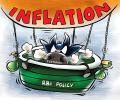
The Reserve Bank on Wednesday lowered the inflation projection for the current fiscal to 4 per cent from 4.2 per cent earlier, taking into account good agricultural output and falling crude prices.

The Indian economy could remain less affected by global trade wars than other countries because the two engines of domestic growth - consumption and investment - are likely to face a limited impact from such headwinds, according to an article on the 'State of the Economy' in the Reserve Bank of India's (RBI's) bulletin, released on Tuesday.

Domestic rating agency ICRA on Monday said Indian companies are likely to clock 7-8 per cent revenue growth during the March quarter of the current fiscal year, led by revival in rural demand and uptick in government spending. ICRA expects the private capital expenditure (capex) cycle to remain measured in view of the uncertainties around geopolitical developments and relatively subdued outlook on merchandise exports from India.
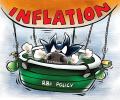
The Reserve Bank of India (RBI) has projected retail inflation at 4.2 percent for the next financial year beginning April while retaining the forecast for 2024-25 at 4.8 percent. The central bank attributed the expected easing of inflation to good kharif production, winter-easing in vegetable prices and favorable rabi crop prospects. However, the RBI also noted that continued uncertainty in global financial markets coupled with volatility in energy prices and adverse weather events presents upside risks to the inflation trajectory.

The rate of unemployment in the country, measured in monthly term, rose to 5.6 per cent in May from 5.1 per cent in April this year mainly due to seasonal variation, showed the government data released on Monday.
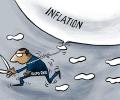
'As the Budget has taken some measures to spur growth, similar action from the MPC may be expected.'
The Reserve Bank on Wednesday retained the retail inflation projection at 4.5 per cent for fiscal 2024-25, with Governor Shaktikanta Das stressing that the central bank will have to closely monitor the price situation and keep the "inflation horse" under tight leash lest it may bolt again. Unveiling the October bi-monthly monetary policy, the Governor also said the flexible inflation targeting (FIT) framework has completed 8 years since its introduction in 2016 and is a major structural reform of the 21st century in India.

Satyajit Ray would have been a hundred years old on May 2. To mark the legendary film-maker's birth centenary, Rediff.com bring you a treasure trove of features from our archives.
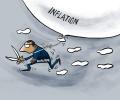
Wholesale price based inflation declined to a 3-month low of 1.89 per cent in November on cheaper food items, and experts predicted a 0.25 per cent interest rate cut by the RBI in the policy review in February. The Wholesale Price Index (WPI) based inflation was 2.36 per cent in October 2024. It was 0.39 per cent in November, last year. In August, 2024, it was 1.25 per cent.
The Reserve Bank of India on Friday retained its projection for retail inflation at 4.5 per cent for the current fiscal assuming a normal monsoon, while emphasising that uncertainties related to food price outlook warrant a close monitoring. Consumer Price Index (CPI)-based retail inflation has been projected at 4.5 per cent with quarter-wise projections at 4.9 per cent in Q1 (April-June), 3.8 per cent in Q2, 4.6 per cent in Q3, and 4.5 per cent in Q4.

Brace for some warmth this winter as the India Meteorological Department (IMD) in its December-February forecast on Thursday said that the minimum and maximum temperatures could remain 'normal' to 'above normal' over most parts of Northwest and Northeast India. Both the minimum and maximum will remain below normal in Southern Peninsular and Central India in these winter months. While this could give some respite from the intense cold of North India, it could have a negative impact on the standing rabi crops if the temperature rise is unusual and abnormal.
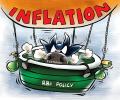
"We have to stand in readiness to go beyond keeping Arjuna's eye to deploying policy instruments, if necessary" to contain inflation, said Reserve Bank Governor Shaktikanta Das on Thursday. Headline consumer price index-based inflation projection for the second quarter of 2023-24 has been revised up substantially, primarily due to the price shock from vegetables, at 6.2 per cent by the RBI form 5.2 per cent estimated in June. Unveiling the bi-monthly monetary policy, Governor Das said the moderation in headline inflation to 4.6 per cent in the first quarter of 2023-24 was in line with the projections set out in the June MPC meeting.

Deteriorating ties between India and Canada could have a bearing on flows into the domestic capital markets. At present, Canada is the seventh largest country for foreign portfolio investor (FPI) flows into India. According to the National Securities Depository Ltd (NSDL), the assets under custody (AUC) of FPIs domiciled in Canada stood at nearly Rs 1.8 trillion ($21 billion) at the end of August. Almost 85 per cent of these investments are in listed equity, while the remaining in debt and hybrid instruments.

The economy may grow by around 7 per cent this financial year as estimated by the Monetary Policy Committee (MPC) of the Reserve Bank of India (RBI), say economists with various organisations. The first advance estimates for 2023-24 will be released on Friday by the National Statistical Organisation (NSO), an exercise done for calculating ratios such as the fiscal deficit. The interim Budget will be presented on February 1.

The economy is likely to log in a tepid 6 per cent growth next fiscal, in line with the consensus estimates, rating agency Crisil said on Thursday. The agency also sees the economy averaging a growth rate of 6.8 per cent over the next five fiscals. Crisil further said it expects the corporate revenue to log in double-digit rise again next fiscal.
The Reserve Bank on Wednesday projected inflation to come down below the upper threshold level of 6 per cent by March quarter of the current fiscal. RBI Governor Shaktikanta Das said the central bank will keep 'Arjuna's eye' (focus) on the evolving inflation dynamics and will remain 'nimble and flexible' to deal with the price situation. Global commodity prices, including crude oil, have undergone some downward correction, but uncertainty continues to surround the near-term outlook in view of the prolonging geo-political hostilities. Moreover, the resurgence in domestic services sector activity could also lead to price increases, especially as firms pass on input costs.

Had he not taken his final curtain call on April 23, 1992, Satyajit Ray would still, undoubtedly, have been making movies.

'The last year's growth is a foretaste of things to come in the retail credit market.'
The Reserve Bank of India on Friday raised the retail inflation target for the current financial year to 5.7 per cent on the back of rising global prices amidst the ongoing geo-political tensions, even as it expected the prices of cereals and pulses to soften on prospects of good winter crop harvest. "Global food prices along with metal prices have hardened significantly. "Economy is grappling with a sharp rise in inflation... Inflation is now projected at 5.7 per cent in 2022-23 with Q1 at 6.3 per cent; Q2 at 5 per cent; Q3 at 5.4 per cent and Q4 at 5.1 per cent," RBI Governor Shaktikanta Das said while unveiling the first monetary policy review for the current fiscal year.
The RBI's Monetary Policy Committee brainstormed the impact of any future shocks on the inflation trajectory and stressed monitoring the cumulative effect of monetary policy actions over the past one year, which is still unfolding, revealed minutes of the rate-setting panel released on Thursday. The minutes of the meeting of the Monetary Policy Committee (MPC), headed by Reserve Bank Governor Shaktikanta Das, also indicated it would be premature to declare an end to the monetary tightening cycle, which started in May 2022 to check high inflation following the outbreak of the Russia-Ukraine war. The central bank, which effected six back-to-back hikes in the key short-term lending rate (repo) since May 2022 to check high inflation, decided to take a pause early this month.

'An eerie similarity with 2019 inflation trajectory could now mean that the RBI and market inflation estimates could go awry.'

The unemployment rate shot up to a record 10.9 per cent in the week that ended on December 18, points out Mahesh Vyas.

While rising interest rates and tighter liquidity are giving negative signals for the financial sector, increasing economic activity could mean higher business volumes for lenders. Liquidity in the banking system has moved from Rs 8 trillion surplus into a deficit of Rs 33,000 crore over the 2022 calendar year. By the end of November, bank credit had grown 17.5 per cent YoY (year-on-year).

'There are occasions when the prices of individual items like food raise inflation; then supply-side measures must be taken.' 'But if there is continued inflation, it means liquidity is aggravating the situation.'

Recently, Slice, a payment app, acquired a 5 per cent stake in North East Small Finance (NESF) for $3.42 million - the first such deal by a fintech in a small finance bank. Slice (valued at $1.5 billion, and backed by Tiger Global, Blume Ventures and Axis Bank) will technically get a toehold in a scheduled commercial bank if NESF were to get a licence to morph into one down the line Such a transition is well within the banking regulator's declared framework. The transaction has to be seen in a larger context.

Chief Economic Adviser V Anantha Nageswaran on Thursday said cryptocurrencies are akin to 'a world of Caribbean pirates' in the absence of a centralised regulatory authority and are yet to pass the test of a fiat currency. He said that the government is pursuing a 'high-wire balancing act' to ensure that the gains in growth, inflation, and rupee stability of the last four years are not frittered away. He said the recent development in Terra-Luna cryptocurrency, which witnessed a massive meltdown last month, is a 'very important cautionary tale'.
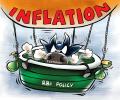
On food inflation, RBI said it is likely to soften from the high levels registered in December and the decline is expected to become more pronounced during the fourth quarter of this fiscal as onion prices ease following arrivals of late kharif and rabi harvests.

The Reserve Bank is working on a phased implementation strategy for its own digital currency and is in the process of launching it in wholesale and retail segments in the near future, RBI Deputy Governor T Rabi Sankar said on Thursday. He said the idea of Central Bank Digital Currency (CBDC) is ripe, and many central banks in the world are working towards it. Sankar further said CBDC is needed to protect consumers from the "frightening level of volatility" seen in some of the virtual currencies which have no sovereign backing.

The minimum support price for the rabi season will not radically alter the falling trajectory of farm incomes

The Reserve Bank of India's (RBI's) recent decision to allow credit cards for payments through the Unified Payments Interface (UPI) is likely to attract a merchant discount rate (MDR), said a top payment industry source. For smaller merchants, a subsidy for MDR could be provided. "With credit card-UPI linkage, UPI will not only be a payment instrument but also a lending platform. "How can banks lend without a commercial model? Also, the government has said MDR will be zero for payment products but not for lending products," the source said, indicating the MDR regime for credit card-linked UPI payments.

New projects fell 6.3 per cent in the December quarter compared with the September quarter. The value of new projects in the just-concluded quarter was Rs 2.1 trillion, according to the data from Centre for Monitoring Indian Economy (CMIE), which was lower than the Rs 2.2 trillion seen in the September quarter. It is, however, higher than Rs 1.5 trillion recorded for the quarter ended December 2020, the first year of the Covid-19 pandemic. This data ties in with the November data for core sector growth, an index of eight core industries, which grew at its slowest pace since early 2021.

'We still don't know how viruses that we ingest are killed inside our bodies.'
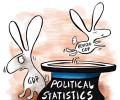
The GDP growth is estimated to come at the "deceptively high" level of 20 per cent for the April-June 2021 quarter but is far below the same in the pre-COVID times, rating agency Icra said on Wednesday. Icra said the low base of the last year, when the GDP had contracted by close to 24 per cent, "conceals" the impact of the second wave of COVID-19 infections. Economic activity is boosted by robust government capital expenditure, merchandise exports and demand from the farm sector, it said, estimating the GDP to grow by 20 per cent and the gross value added (GVA) will register a growth of 17 per cent for the June quarter.
'While intensification of fuel prices and broad-based domestic cost pass-through pressures is a downside risk, core inflation is expected to strengthen further as demand recovers to pre-Covid levels,' the ministry said on Friday.
Under the PMFBY - introduced in 2016 - farmers have to pay a maximum of 2 per cent of the sum insured for kharif and 1.5 per cent for rabi food and oilseed crops and 5 per cent for commercial/horticultural crops. Eighteen general insurance companies, including five public sector insurance firms, have been empanelled for the scheme's implementation.

As of December 2018, a total amount of Rs 51,513 crore has been infused into PSBs.
